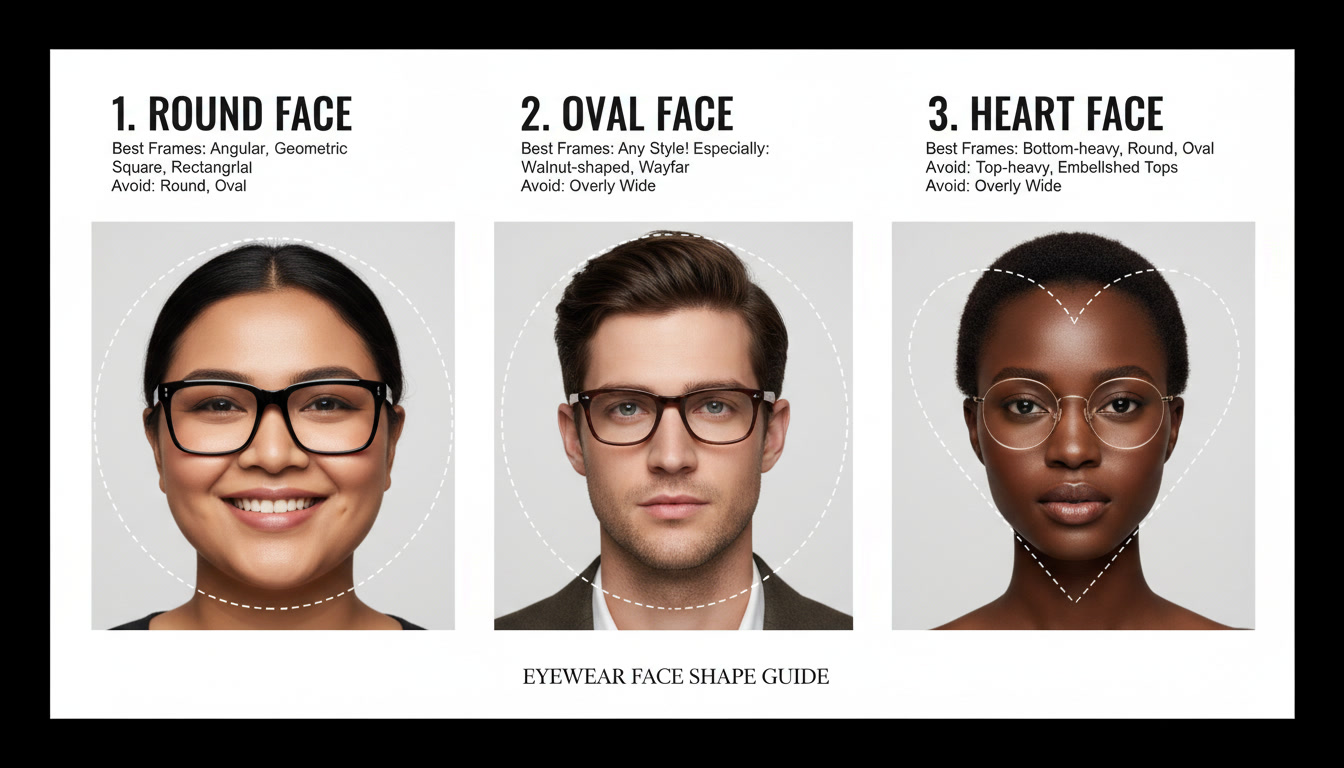
Finding the perfect pair of glasses isn’t just about picking a color you like or a price that works. The secret to frames that genuinely look great on you comes down to one thing: your face shape.
The right frames balance your natural proportions, highlight your best features, and feel like they were made for you. The wrong ones? They can throw everything off — making
your face look wider, longer, or just… not quite right.
This guide breaks down the six most common face shapes, explains how to identify yours, and gives you specific frame recommendations backed by styling principles that
eyewear professionals have relied on for decades.
How to Determine Your Face ShapeBefore diving into recommendations, you need to know what you’re working with. Stand in front of a mirror (or take a straight-on selfie) and look at three things:
1. Forehead width — Is it wider or narrower than your cheekbones and jaw?
2. Cheekbone width — Are your cheekbones the widest part of your face?
3. Jawline shape — Is it rounded, angular, or pointed?
4. Face length — Is your face longer than it is wide, or roughly equal?
You can also trace your face outline on a mirror with a dry-erase marker or use the edge of a credit card to compare widths at different points. Don’t overthink it — most
people can identify their shape within a few minutes.
Oval Face Shape
How to Identify It
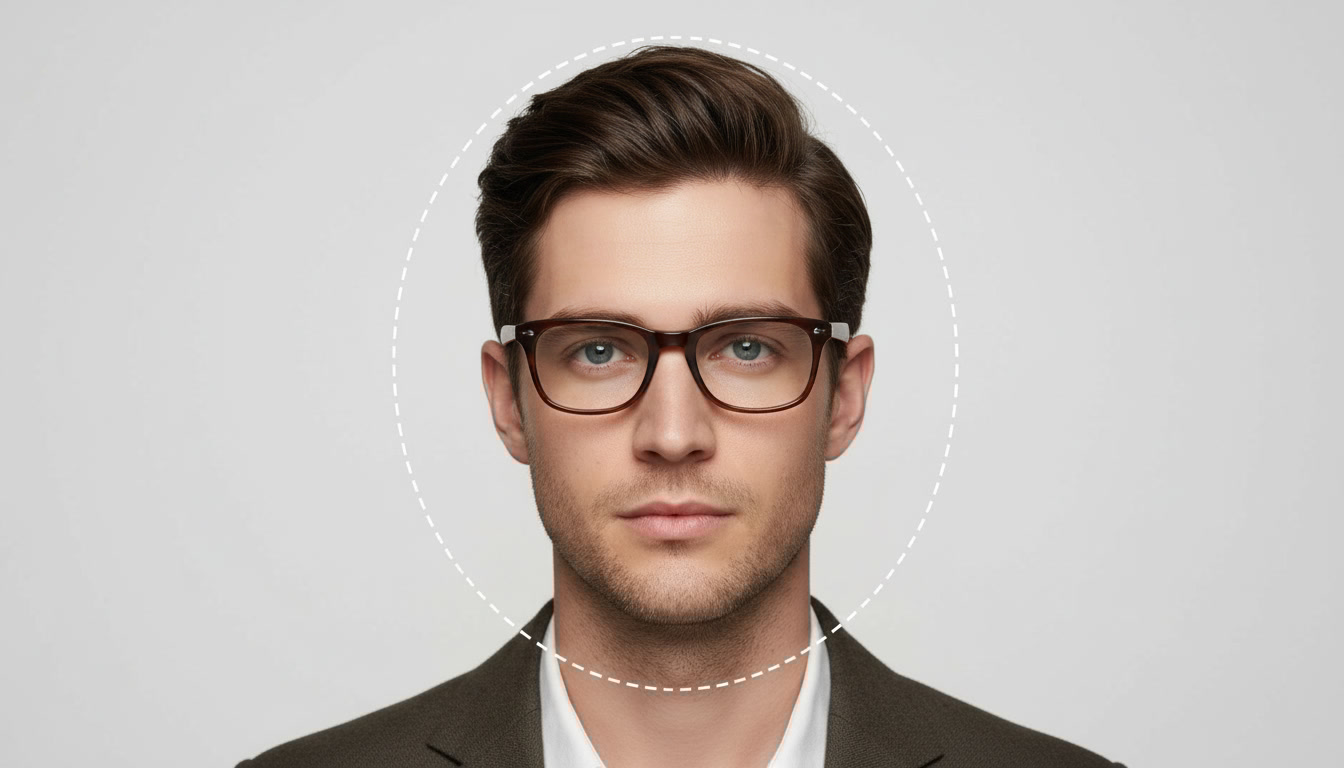
An oval face is slightly longer than it is wide, with a gently rounded jawline and a forehead that’s just a bit wider than the chin. The cheekbones sit at the widest point.
Think of an upside-down egg shape.
Key features: Balanced proportions, soft angles, forehead slightly wider than jaw, rounded chin.
Best Frames for Oval Faces
Good news — oval is considered the most versatile face shape for eyewear. Your balanced proportions mean most frame styles work well. That said, the goal is to maintain your
face’s natural balance rather than distort it.
Top picks:
– Walnut-shaped frames — These wider-than-deep frames complement oval proportions perfectly
– Rectangle glasses — Add subtle structure without overwhelming your soft features
– Square frames — Create a nice contrast with your rounded jawline
– Cat-eye frames — The upswept corners draw attention to your cheekbones
What to avoid: Frames that are too narrow or too small for your face. They’ll make your face look longer than it is. Also avoid overly round frames, which can exaggerate the
oval shape rather than complement it.
Color tip: Oval faces can pull off bold frame colors confidently. Try tortoise patterns for a classic look or blue frames if you want something that stands out.
Round Face Shape
How to Identify It
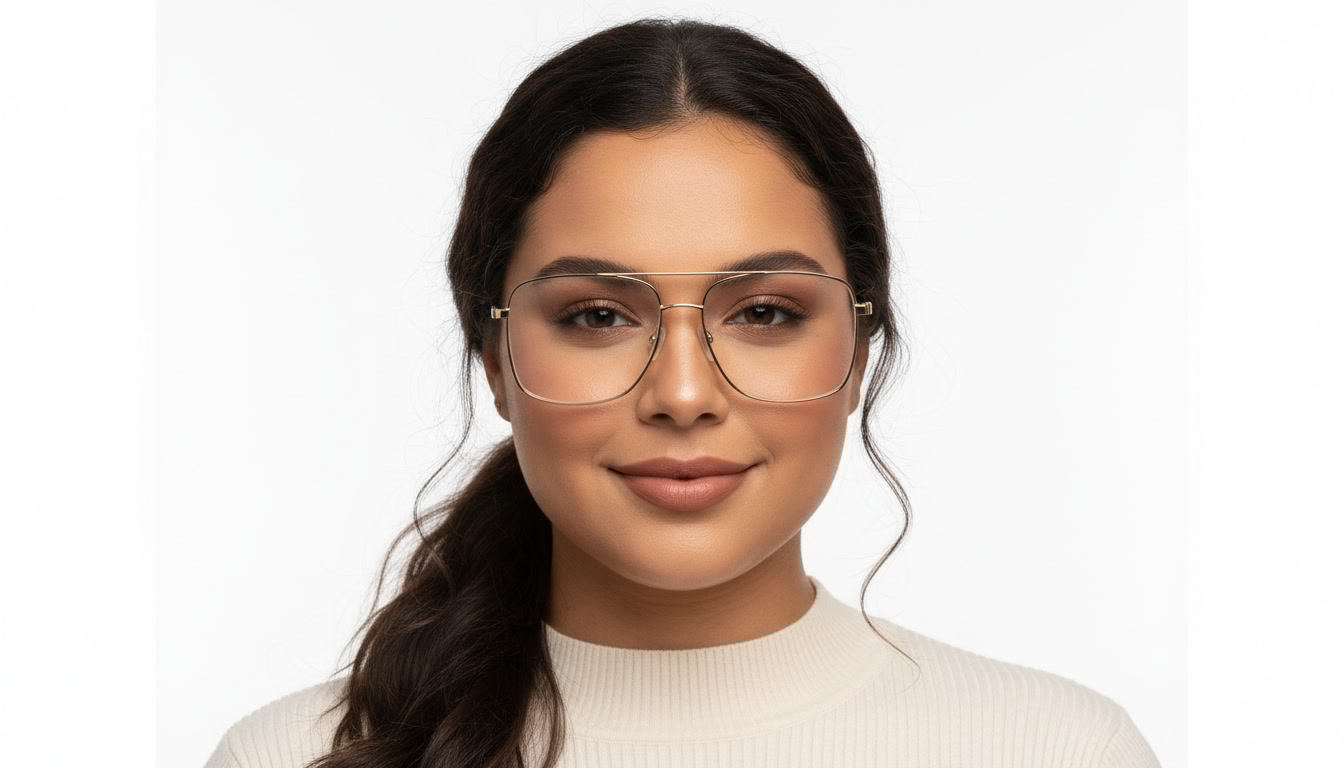
Round faces are roughly as wide as they are long, with full cheeks, a rounded chin, and a hairline that curves gently. There aren’t many sharp angles — everything flows in
soft curves.
Key features: Width and length are approximately equal, full cheeks, rounded chin, wide forehead.
Best Frames for Round Faces
The principle here is contrast. Angular frames add the definition that round faces naturally lack, creating a more balanced and structured appearance. You want frames that
lengthen and slim rather than emphasize roundness.
Top picks:
– Rectangle glasses — The straight lines and sharp corners are the #1 recommendation for round faces
– Square frames — Same angular contrast as rectangles, slightly bolder
– Cat-eye glasses — The upswept edges lift the face visually and add angles at the top
– Geometric frames — Hexagonal or angular shapes create interesting structure
What to avoid: Round frames can work if they’re slightly angular (like a P3 shape), but perfectly circular frames will emphasize the roundness of your face. Also skip small,
narrow frames — they’ll look lost on full cheeks.
Color tip: Darker frames like black or brown create stronger lines and add more definition than lighter colors.

Square Face Shape
How to Identify It
Square faces have a strong, angular jawline with a forehead, cheekbones, and jaw that are all roughly the same width. The face appears broad and proportional with defined
angles, especially at the jaw.
Key features: Wide forehead, strong jawline, angular jaw corners, face width and length roughly equal.
Best Frames for Square Faces
You want to soften those strong angles. Rounded and curved frames provide contrast and keep your face from looking too boxy. Frames that sit higher on the face or have
curved edges work especially well.
Top picks:
– Round glasses — The curves soften your angular features beautifully
– Oval frames — A subtle version of the same softening effect
– Cat-eye frames — The upswept shape draws attention upward, away from the jawline
– Browline frames — The thicker top bar balances a strong jaw by adding weight above
What to avoid: Boxy, angular frames like sharp rectangles or square frames. They’ll mirror your face shape and double down on the angularity. Also avoid frames with heavy
bottom rims, which draw attention to the jawline.
Color tip: Lighter colors like crystal, gold, or silver feel softer and less severe on angular faces than stark dark frames.
Heart Face Shape
How to Identify It
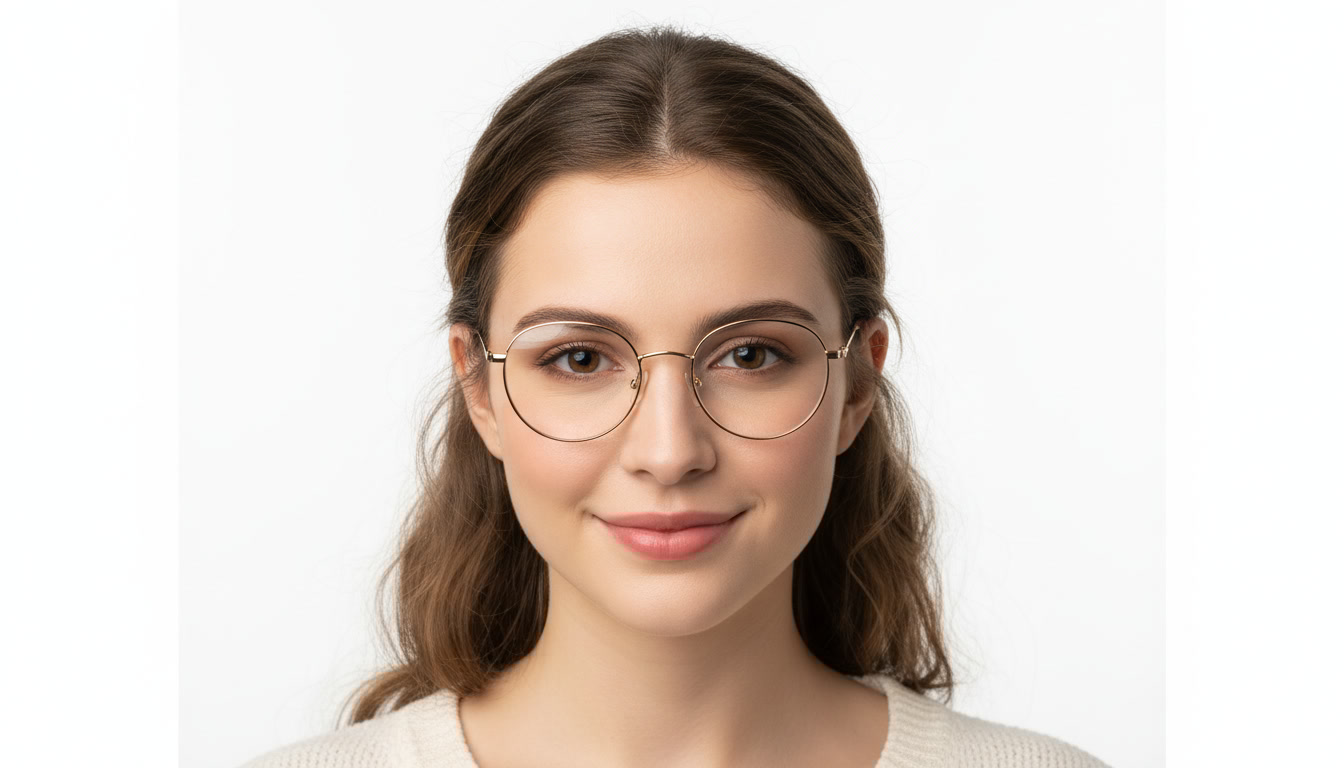
Heart-shaped faces are widest at the forehead, narrowing down through the cheekbones to a pointed or narrow chin. Some heart shapes also feature a widow’s peak hairline. The
overall impression is of an inverted triangle.
Key features: Broad forehead, high cheekbones, narrow jaw, pointed chin.
Best Frames for Heart Faces
The goal is to balance a wider forehead with a narrower chin. Frames that are wider at the bottom or have low-set details help draw attention downward and create the
illusion of more width at the lower face.
Top picks:
– Bottom-heavy frames — Aviators and frames with thicker bottom rims add visual weight where you need it
– Round glasses — Soften the wider forehead without adding more width at the top
– Rimless or semi-rimless frames — Lightweight styles that don’t add bulk at the temples
– Oval frames — A safe, flattering middle ground for heart shapes
What to avoid: Top-heavy frames like thick browlines or oversized cat-eye glasses — they’ll make your forehead look even wider. Also skip frames that are wider than your
forehead, as they’ll exaggerate the inverted triangle effect.
Color tip: Medium tones like tortoise, brown, or teal keep the visual weight balanced without being too bold at the top of your face.

Oblong (Rectangle) Face Shape
How to Identify It
Oblong faces are noticeably longer than they are wide, with a forehead, cheekbones, and jawline that are all similar in width. The face appears stretched vertically.
Sometimes called a “rectangular” face shape, though the features may be angular or rounded.
Key features: Face length significantly greater than width, long straight cheek line, high forehead, elongated appearance.
Best Frames for Oblong Faces
You want to add width and break up the vertical length. Deeper frames (tall lenses), decorative temples, and styles that emphasize horizontal lines all work in your favor.
Top picks:– Oversized frames — Large frames cover more vertical real estate and shorten the face visually
– Round glasses — Add width and break up long vertical lines
– Aviator frames — The deep lens and wider bridge create a shortening effect
– Decorative or bold temples — Add visual width at the sides
– Cat-eye frames — Wide cat-eye shapes add horizontal emphasis
What to avoid: Small, narrow frames that leave too much face visible — they’ll make your face look even longer. Avoid narrow rectangle frames with shallow lenses for the
same reason.
Color tip: Bold, attention-grabbing colors like red, purple, or blue draw the eye to your frames and create a visual “break” in the face’s vertical length.

Diamond Face Shape
How to Identify It
Diamond faces are widest at the cheekbones, with a narrower forehead and jawline. The chin may come to a soft point, and the hairline is often narrow. It’s one of the less
common face shapes and sometimes gets confused with heart or oval shapes.
Key features: Narrow forehead and jawline, cheekbones are the widest point, angular cheekbone structure, pointed chin.
Best Frames for Diamond Faces
The goal is to highlight your striking cheekbones while adding width at the top of the face (forehead) and softening the overall angular look. Frames with detailing at the
brow line or wider top rims balance things out nicely.
Top picks:
– Cat-eye glasses — The upswept shape mirrors and highlights your cheekbones beautifully
– Oval frames — Soften your angular features while complementing the diamond proportions
– Browline frames — Add width and emphasis at the forehead to balance narrow temples
– Rimless frames — Keep things open and airy so your bone structure stays the focus
What to avoid: Narrow frames that are the same width as your cheekbones — they’ll accentuate the diamond shape too aggressively. Also avoid boxy or angular frames that
compete with your natural angles.
Color tip: Gunmetal and silver metal frames work exceptionally well on diamond faces — they’re refined without being bulky, and they let your facial structure do the
talking.
Quick Reference: Face Shape Cheat Sheet
– Oval — Best: rectangle, square, cat-eye, walnut. Avoid: too-small frames, perfectly round.
– Round — Best: rectangle, square, cat-eye, geometric. Avoid: circular frames, small frames.
– Square — Best: round, oval, cat-eye, browline. Avoid: boxy/angular frames, heavy bottom rims.
– Heart — Best: bottom-heavy, round, rimless, oval. Avoid: wide cat-eye, thick browlines, oversized.
– Oblong — Best: oversized, round, aviator, wide cat-eye. Avoid: small/narrow frames, shallow rectangles.
– Diamond — Best: cat-eye, oval, browline, rimless. Avoid: narrow frames at cheekbone width, boxy.
Beyond Face Shape: Other Factors to Consider
Face shape is the starting point, not the whole story. Keep these in mind when making your final choice:
– Skin tone and frame color — Warm skin tones pair well with gold, tortoise, and brown frames. Cooler skin tones look great with silver, black, and blue.
– Frame size — Your frames should be roughly as wide as the widest part of your face. The top of the frame should follow your brow line without covering it completely.
– Nose bridge fit — A wider nose bridge on the frames pushes lenses apart and makes the nose appear narrower. A narrow bridge does the opposite.
– Lifestyle — If you wear glasses all day at work, comfort and weight matter as much as style. Metal frames tend to be lighter; acetate frames offer bolder color options.
– Personal style — These are guidelines, not rules. If you love round frames and have a round face, try them on. Some people intentionally match their face shape for a
cohesive, soft look — and it works.
Frequently Asked Questions
What face shape looks good in every type of glasses?
Oval faces have the most versatility because their balanced proportions work with nearly every frame shape. That said, no face shape is truly limited — it’s more about
finding the right size and proportion within any given style.
Can I wear glasses that “break the rules” for my face shape?
Absolutely. These guidelines exist to help you find frames that create balance, but fashion is personal. If a pair of glasses makes you feel confident, that confidence
shows. Try frames on before ruling anything out based solely on face shape charts.
How do I know if my glasses are the right size?
Three quick checks: (1) the frames should be roughly as wide as your face — not extending beyond your temples or squeezing them, (2) your eyes should sit near the center of
each lens, and (3) the frames shouldn’t touch your cheeks when you smile.
Do face shape rules apply to sunglasses too?
Yes, the same principles apply. The main difference is that sunglasses tend to be larger, so you may want to size up compared to your everyday frames. Oversized sunglasses
are more forgiving across face shapes than oversized prescription glasses.
What glasses are best for a small face?
Look for frames labeled as “petite” or with lens widths under 50mm. Round and oval shapes tend to come in smaller sizes more often than wide rectangular styles. Avoid
oversized or chunky acetate frames that can overwhelm small features.
Should I match my glasses to my face shape or contrast it?
The traditional advice is to contrast — angular frames for round faces, curved frames for square faces. But matching (round frames on a round face, for example) creates a
softer, more harmonious look that many people prefer. Try both approaches and see which makes you feel more like yourself.
About the Author

Miriam Butler
Miriam is a Licensed Optician with more than 30 years of experience helping customers with their vision.