Reading your Prescription
If you’ve ever looked at your eyeglass prescription and thought, “I have no idea what this means,” you’re not alone.
Prescriptions are filled with numbers, abbreviations, plus and minus signs — and most people are never actually taught how to read them. You’re just expected to hand them over and trust the process.
But once you understand your prescription, everything changes. Choosing lenses becomes easier. Ordering glasses online becomes less intimidating. And you feel confident instead of unsure.
This guide breaks everything down clearly and simply. By the end, you’ll know exactly what each number means — and why it matters.
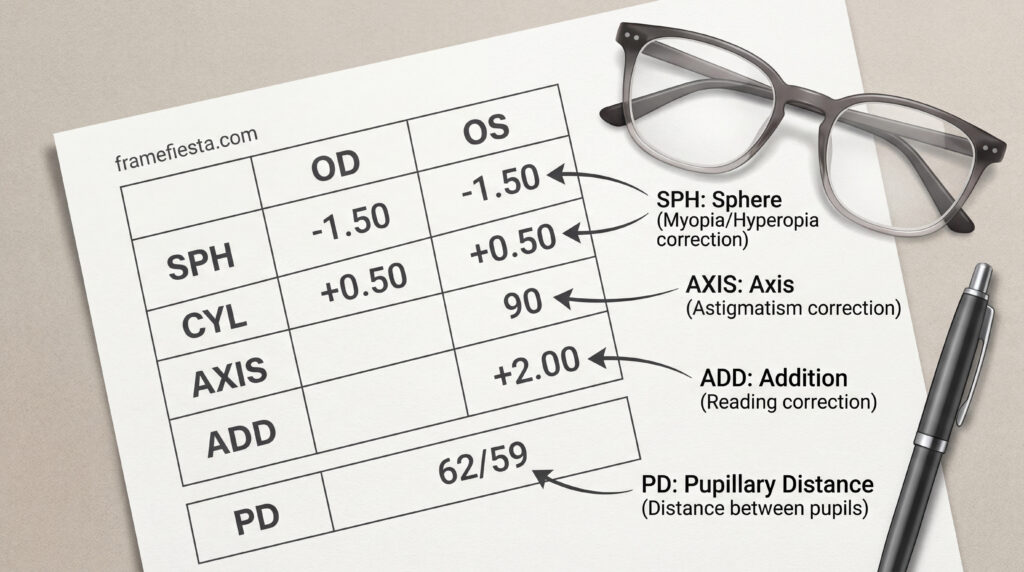
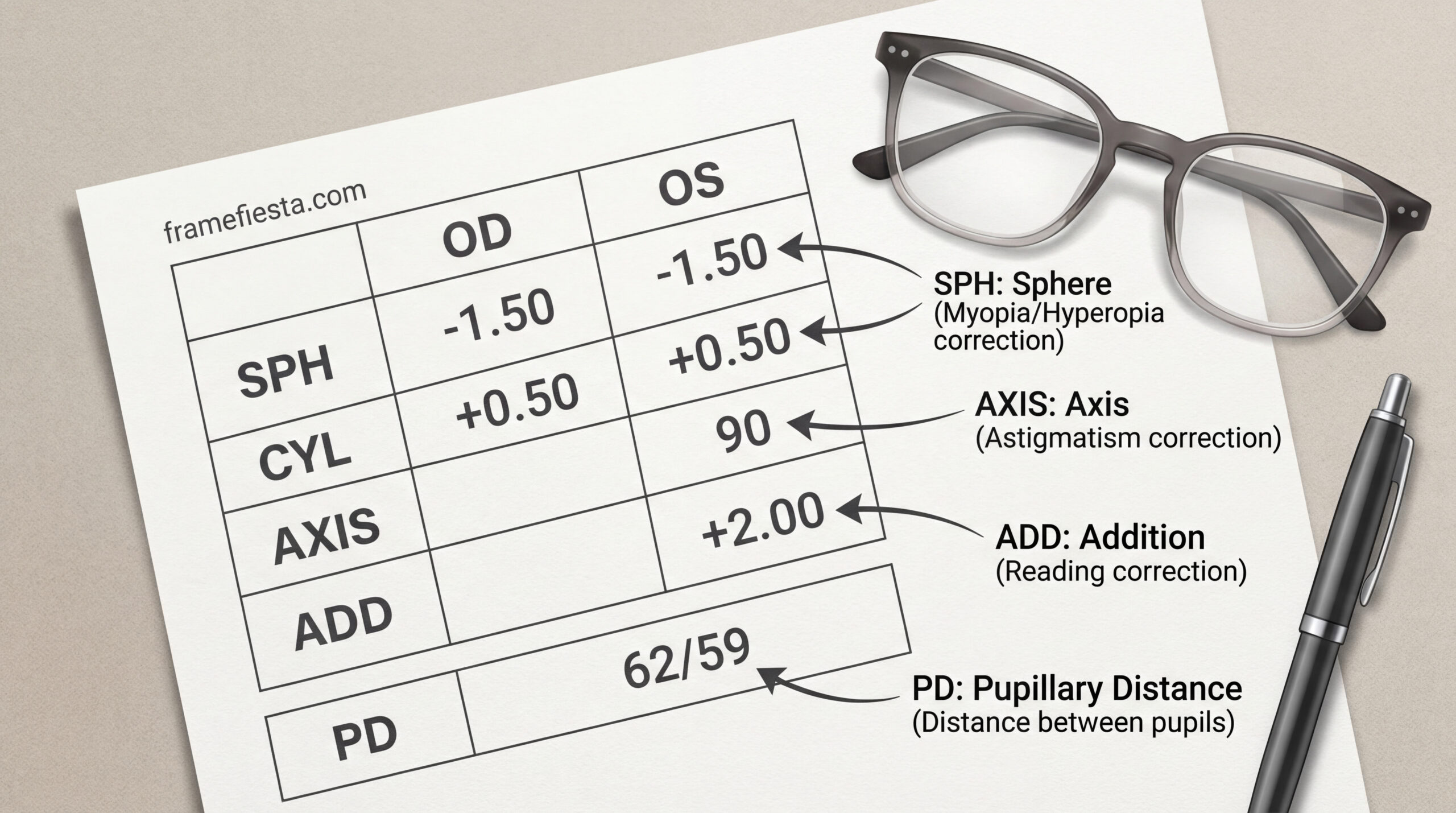
What an Eyeglass Prescription Typically Looks Like
Most eyeglass prescriptions follow a similar format, even if the layout looks slightly different depending on the doctor or office.
You’ll usually see two rows — one for each eye — and several columns of numbers.
Here’s a common example:
OD (Right Eye): SPH -2.25 | CYL -0.75 | AXIS 180 | ADD +1.50
OS (Left Eye): SPH -1.75 | CYL -1.25 | AXIS 170 | ADD +1.50
Each of these numbers plays a specific role in correcting your vision.
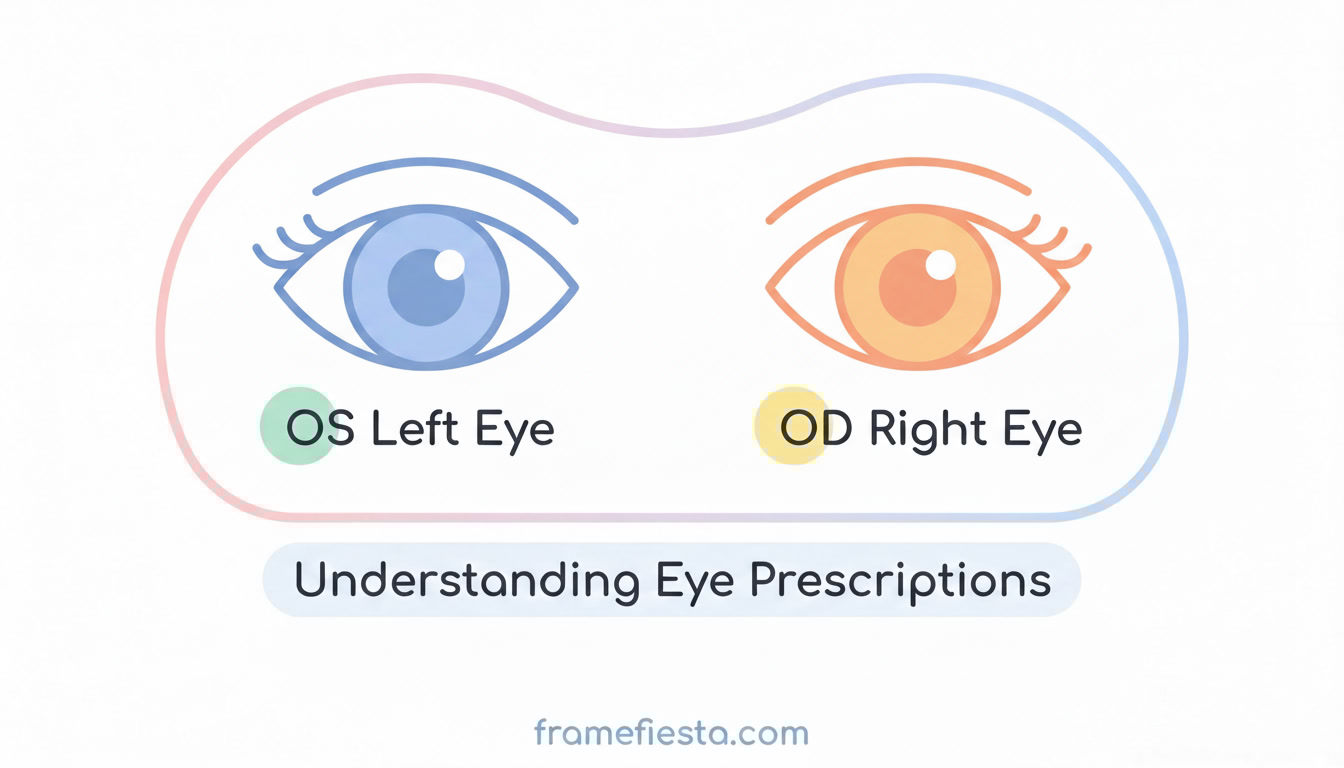
OD and OS: Right Eye and Left Eye
OD and OS are medical abbreviations that identify which eye the prescription applies to.
OD refers to your right eye.
OS refers to your left eye.
These labels are written from your point of view, not the doctor’s.
SPH (Sphere): Your Main Vision Correction
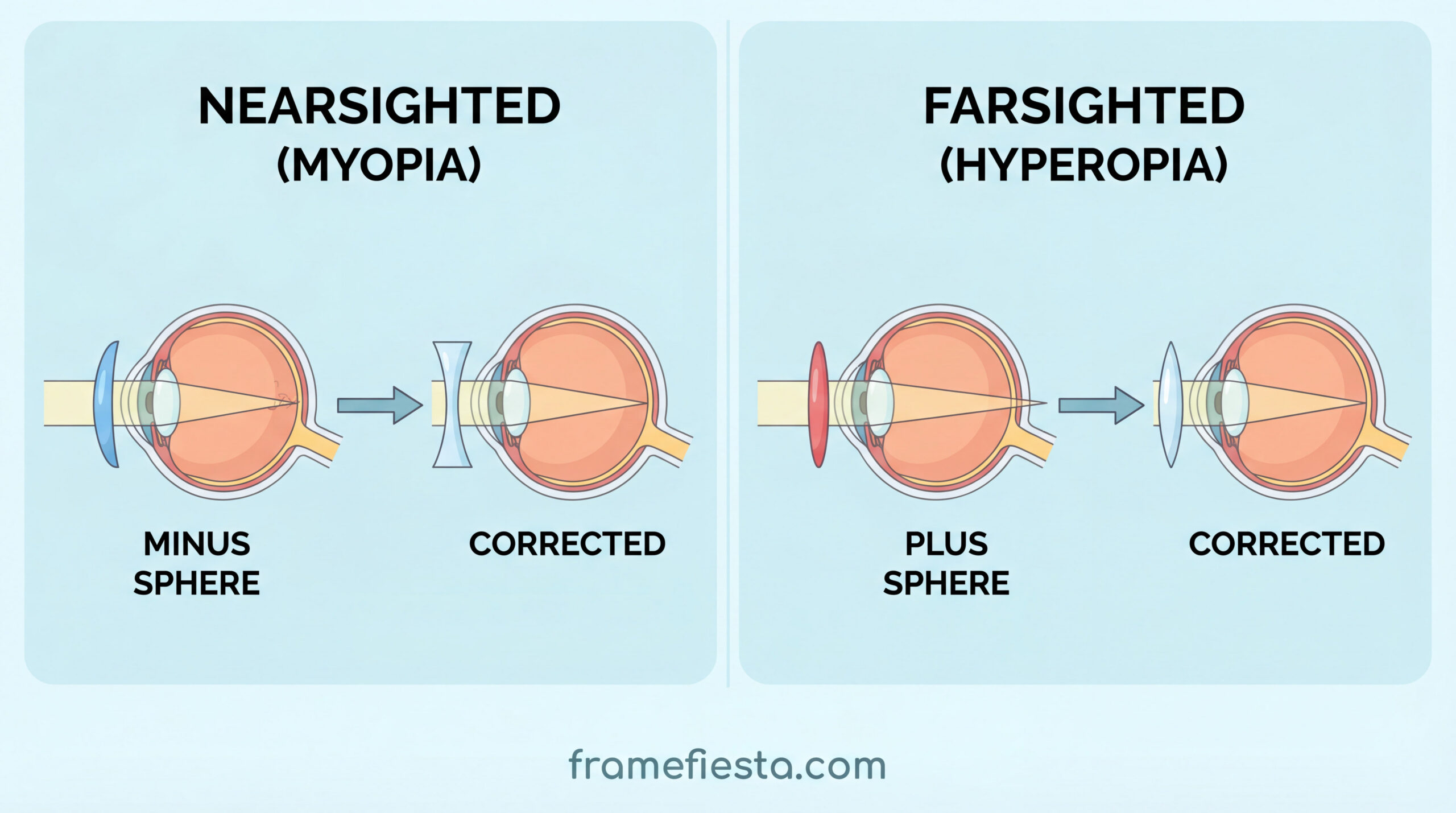
Sphere, often written as SPH, is the primary strength of your prescription.
This number corrects whether you are nearsighted or farsighted.
A minus sign (–) means nearsighted.
A plus sign (+) means farsighted.
The larger the number, the stronger the correction needed.
Sphere values typically increase in steps of 0.25, and even small changes can affect clarity and comfort.
CYL (Cylinder): Astigmatism Correction
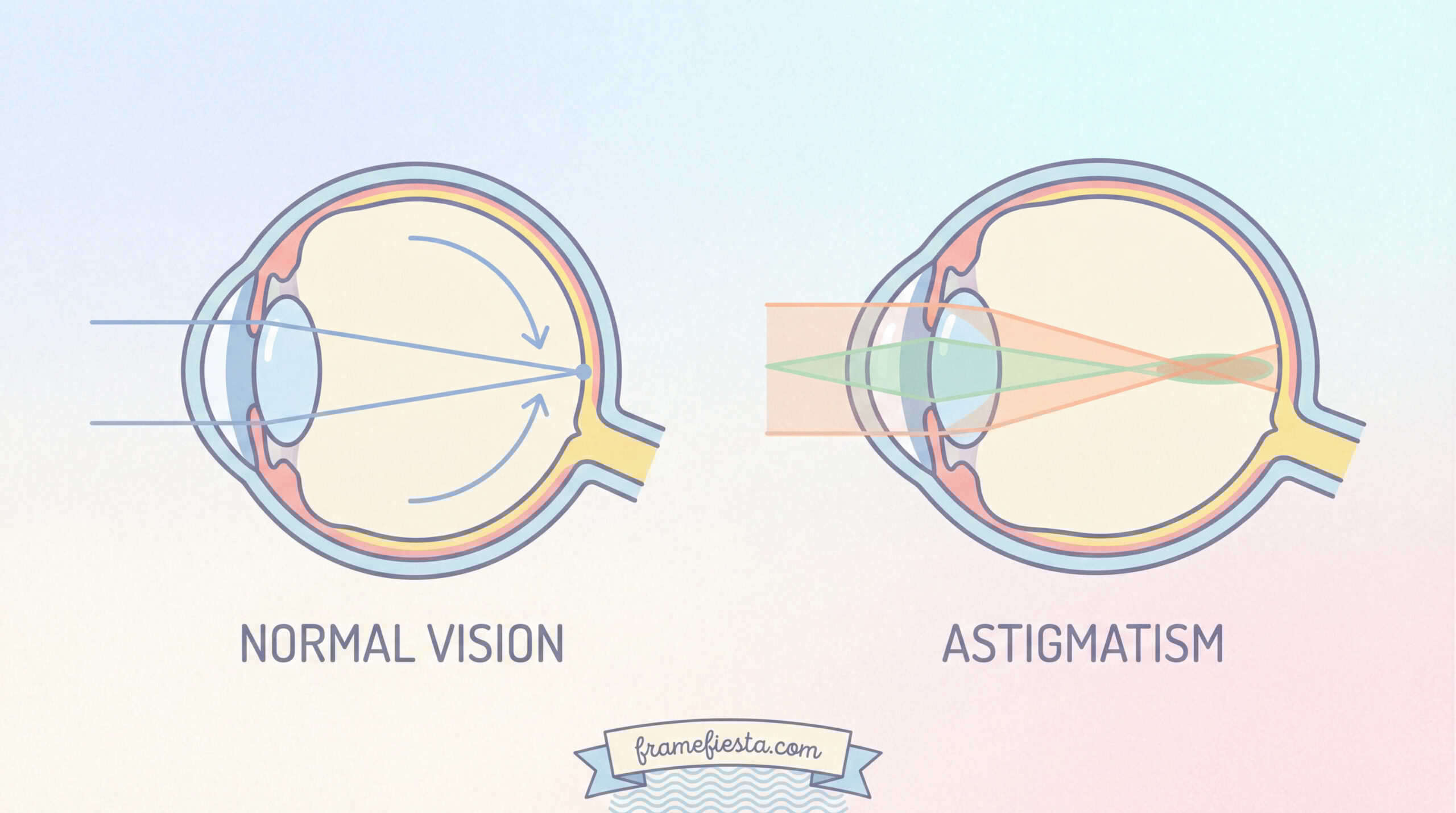
If your prescription includes CYL, it means you have astigmatism — which is extremely common.
Astigmatism simply means the eye is not perfectly round. Instead of light focusing evenly, it bends differently in certain directions, which can cause blur or distortion.
The CYL number tells the lens how much astigmatism correction is needed.
Not everyone has a CYL value, and that’s completely normal.
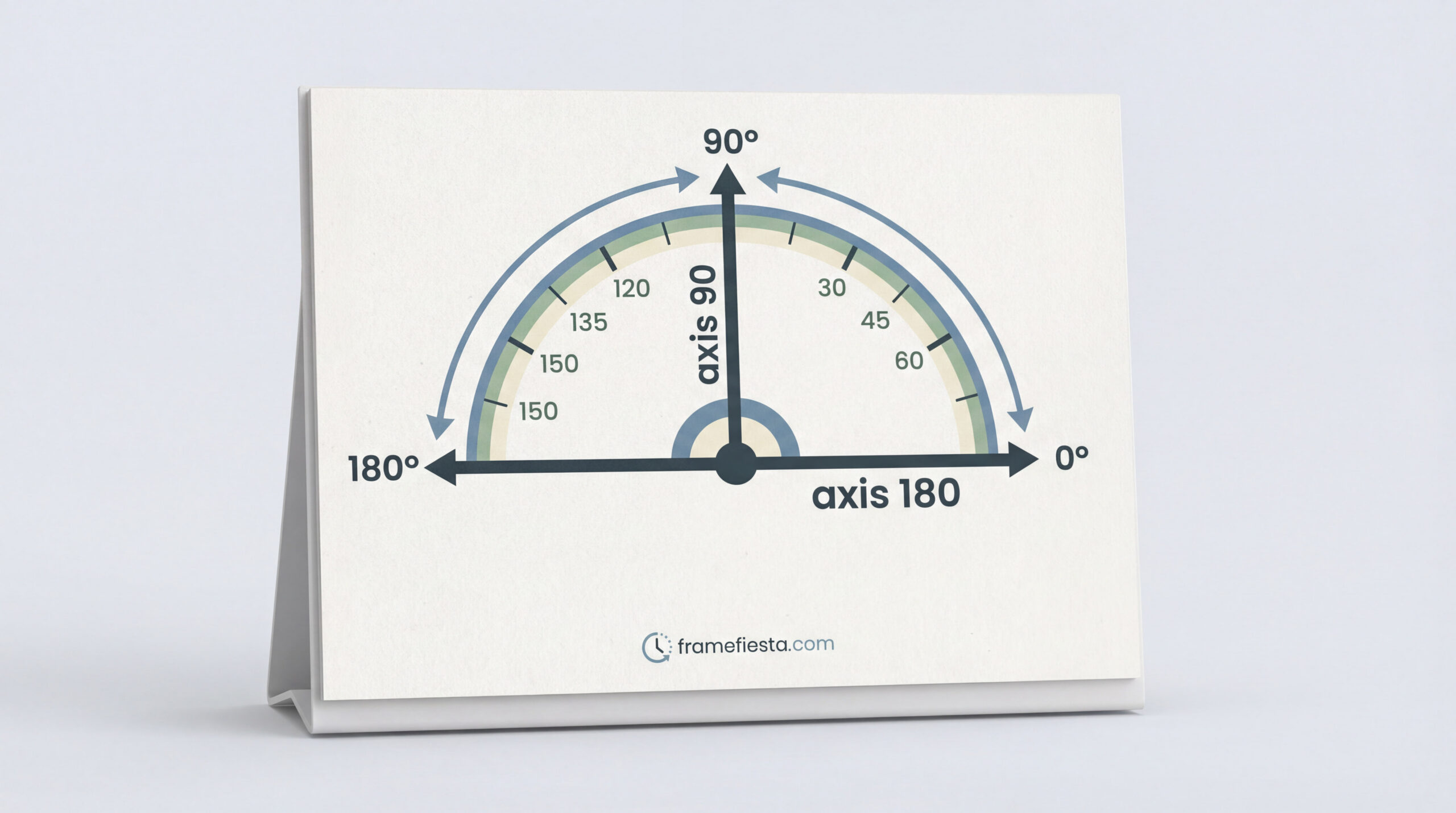
AXIS: The Direction of Astigmatism
Axis only appears if you have a CYL value.
Axis is not a strength — it’s a direction. It tells the lab how to position the astigmatism correction in your lens.
Axis is measured in degrees from 0 to 180.
It’s similar to a compass or clock direction for the lens correction.
How SPH, CYL, and AXIS Work Together
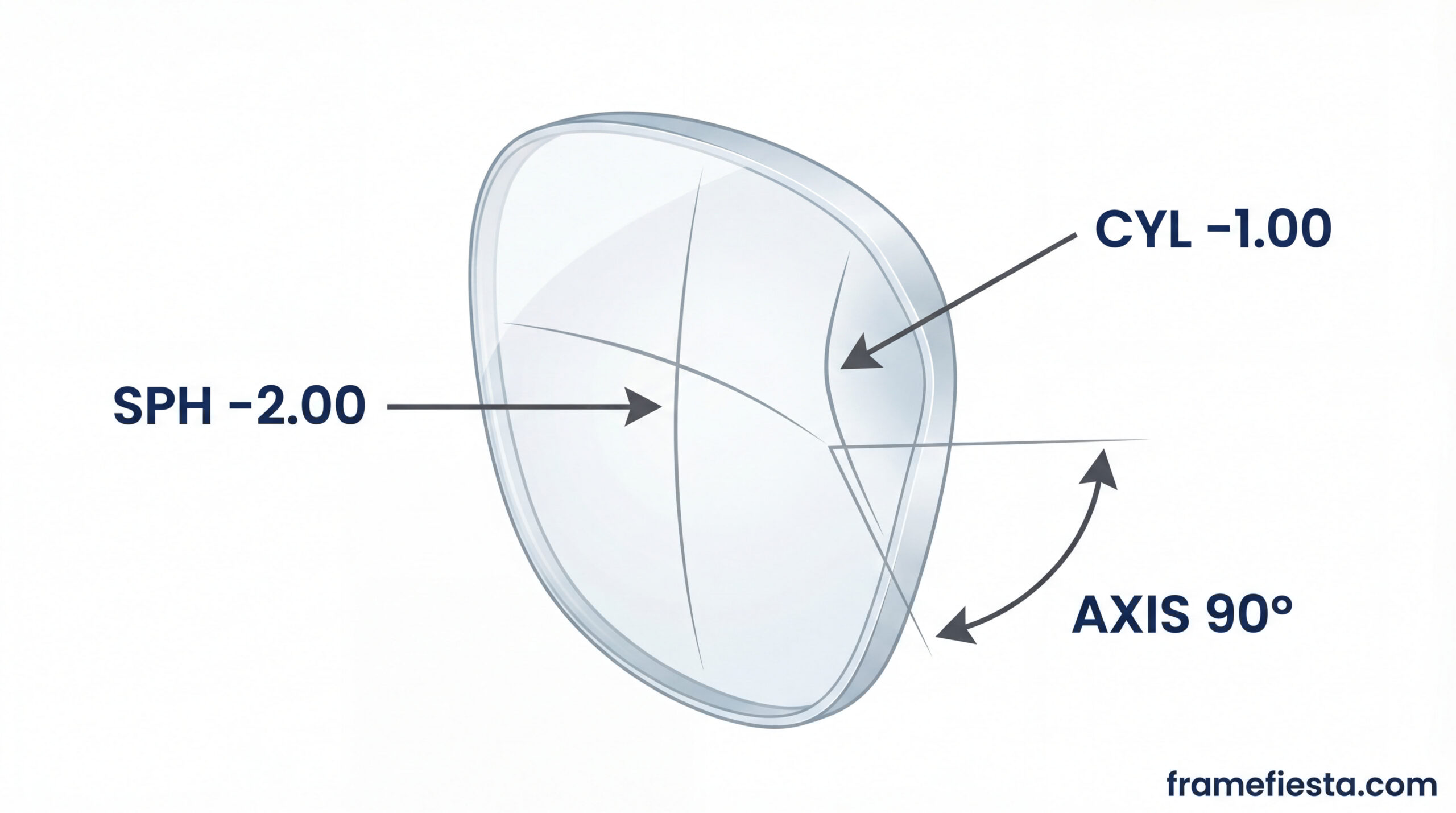
These three values work as a system.
Sphere corrects overall focus.
Cylinder corrects astigmatism strength.
Axis tells the lens where to apply that correction.
Together, they allow the lens to be made precisely for your eyes — which is why accuracy matters so much.
ADD: Extra Power for Reading and Progressives
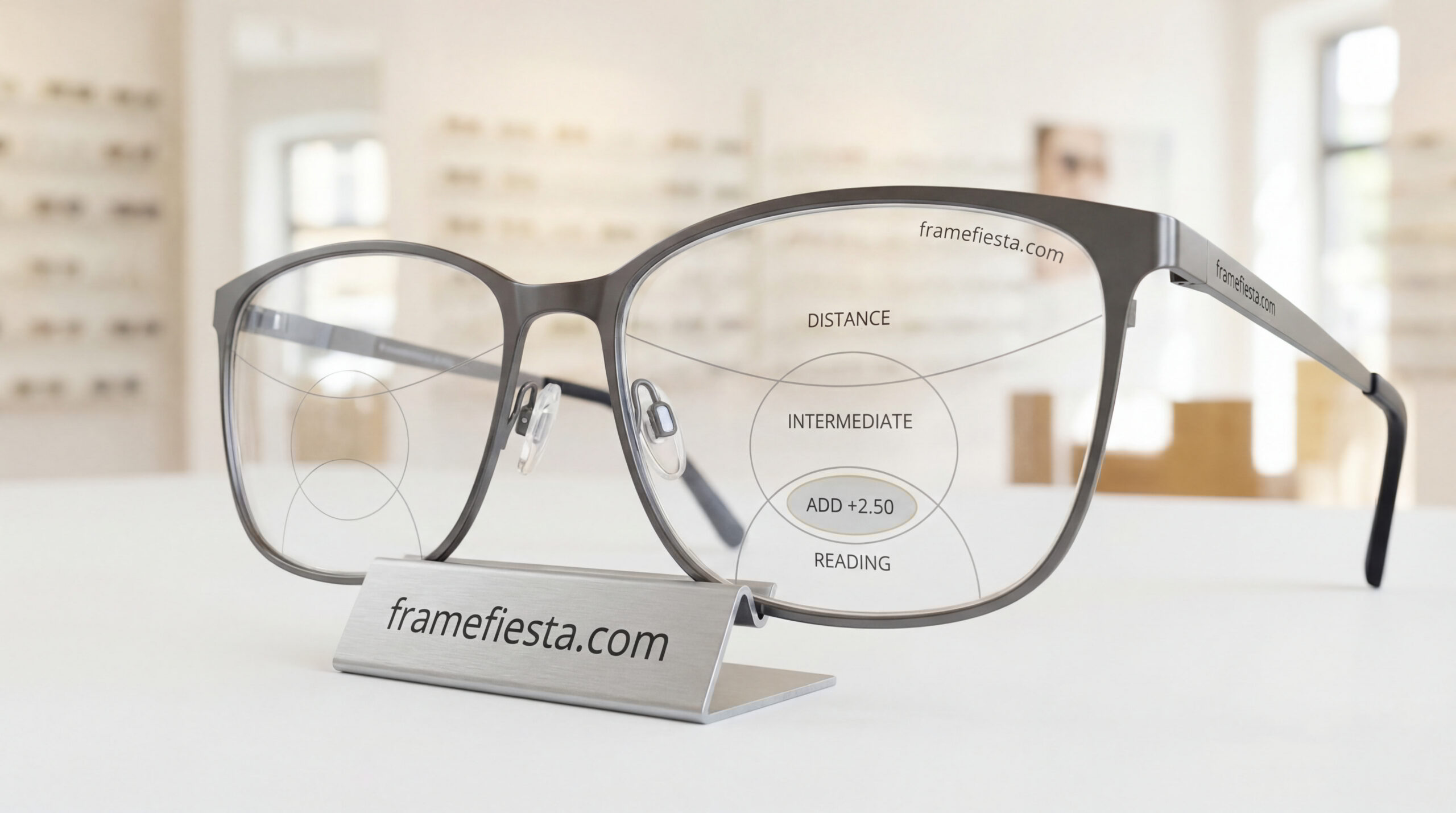
ADD stands for “addition” and is used for near vision correction.
This value is common in prescriptions for:
- Progressive lenses
- Bifocals
- Reading segments
ADD power is added to your distance prescription in the lower portion of the lens to help with reading and close-up tasks.
The ADD value is the same for both eyes in most prescriptions.
Prism: Specialized Vision Support (Not Everyone Has This)
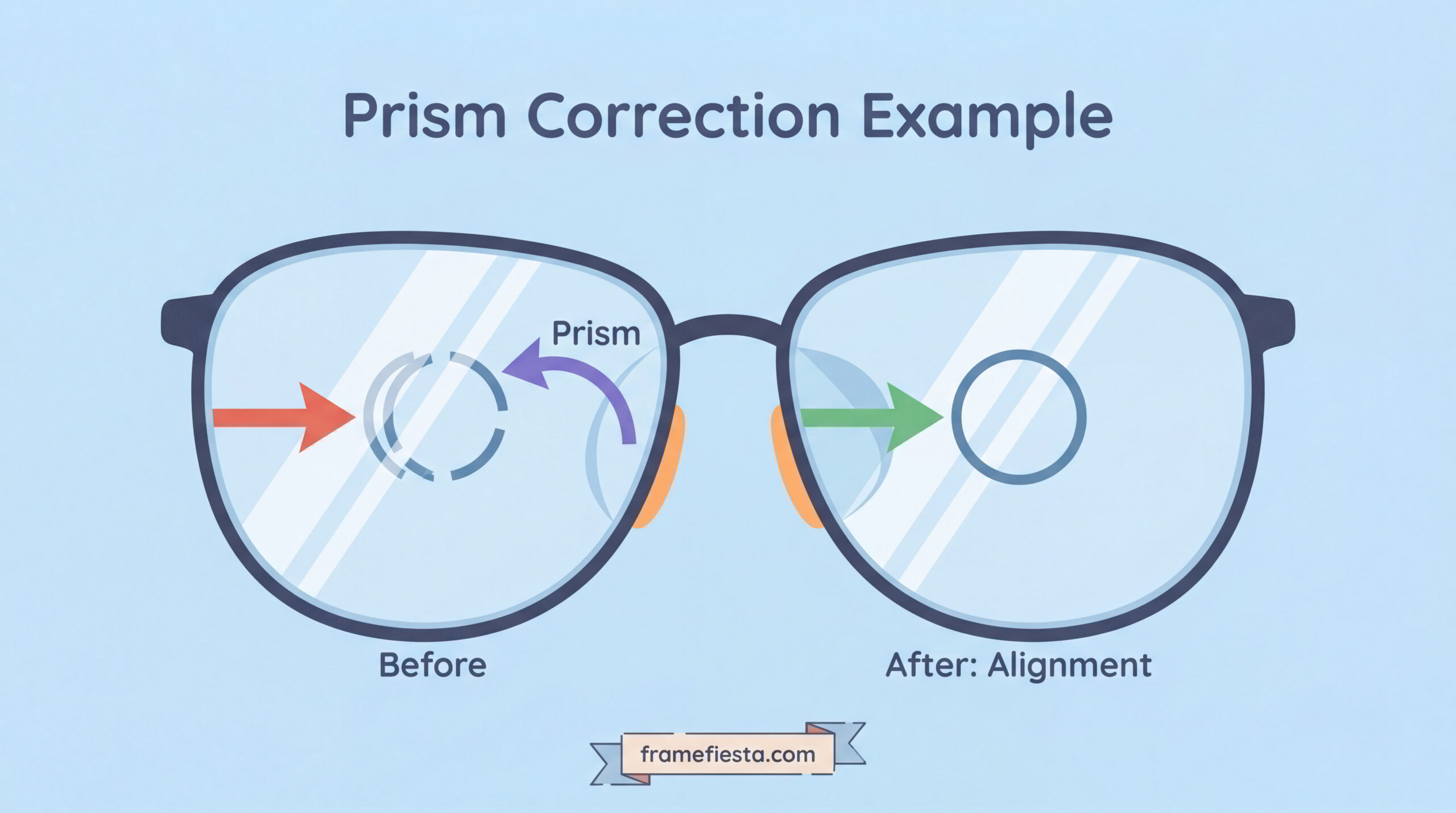
Some prescriptions include prism correction, which helps with eye alignment issues such as double vision.
Prism values may be listed with directions like BI, BO, BU, or BD.
Not all prescriptions include prism, and if yours doesn’t, there’s nothing missing.
PD (Pupillary Distance): Centering Your Vision
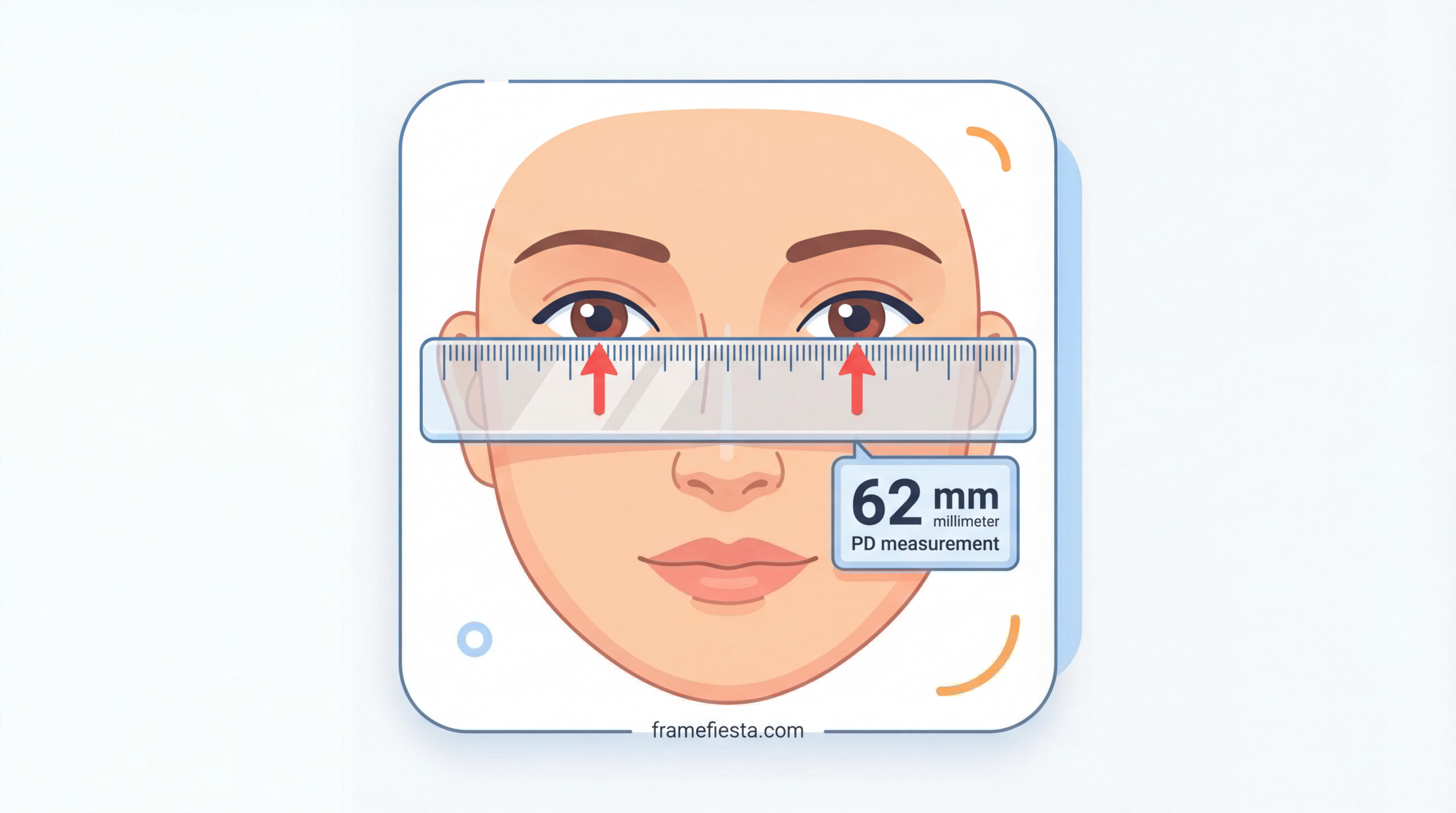
PD stands for pupillary distance — the distance between the centers of your pupils, measured in millimeters.
This number is critical when ordering glasses online because it determines where the optical center of each lens is placed within the frame.
PD may be written as:
- One number (for both eyes combined), or
- Two numbers (one for each eye)
If PD is incorrect, even a perfect prescription can feel uncomfortable.
Real Eyeglass Prescription Examples (Translated)
Example 1: Nearsighted with Astigmatism
OD: SPH -2.50 | CYL -0.75 | AXIS 180
OS: SPH -1.75 | CYL -1.25 | AXIS 170
This prescription shows nearsightedness in both eyes, along with astigmatism. The axis values indicate how the astigmatism correction should be positioned in each lens.
Example 2: Farsighted with Astigmatism
OD: SPH +1.25 | CYL -0.50 | AXIS 090
OS: SPH +1.50 | CYL -0.75 | AXIS 085
This prescription corrects farsightedness along with mild astigmatism in both eyes.
Example 3: Progressive Lens Prescription
OD: SPH -1.50 | CYL -0.50 | AXIS 175 | ADD +2.00
OS: SPH -1.25 | CYL -0.75 | AXIS 160 | ADD +2.00
This prescription includes distance correction, astigmatism correction, and additional reading power for progressive lenses.
Common Questions People Ask
Why do SPH and CYL sometimes have different plus or minus signs?
Because they correct different aspects of vision. Sphere corrects near or far focus, while cylinder corrects astigmatism.
Why does my axis change from one exam to the next?
Small axis changes are normal, especially with astigmatism. Precision matters, which is why accurate lens production is important.
Is it okay to order glasses online with my prescription?
Yes — as long as the prescription is current and entered correctly.
Frequently Asked Questions
How do I read my eyeglass prescription?
Start with OD and OS. SPH is your main strength, CYL and AXIS correct astigmatism, ADD is for near vision, and PD centers your lenses correctly.
What does sphere cylinder axis mean on a prescription?
Sphere is your overall vision correction, cylinder is the amount of astigmatism correction, and axis tells the direction that correction is applied.
What does a minus sign mean on my prescription?
A minus sign indicates nearsightedness, meaning distance vision needs correction.
What does a plus sign mean on my prescription?
A plus sign indicates farsightedness, which often affects near vision.
What is PD and why is it important?
PD ensures lenses are centered correctly in the frame for clear, comfortable vision.
What Does Axis 180 Mean on Your Prescription?
Axis 180 is one of the most common axis values you will see on an eyeglass prescription, and it is also one of the most frequently searched terms. If your prescription shows AXIS 180, it means your astigmatism correction is oriented horizontally — along the widest angle of your eye.
Think of the axis like a protractor placed over your eye. Zero degrees starts at the right (3 o’clock position), and 180 degrees is directly across at the left (9 o’clock position). An axis of 180 means the cylindrical correction in your lens runs perfectly horizontal.
This is completely normal and very common. In fact, the majority of people with astigmatism have axis values near 180 (called “with-the-rule” astigmatism) or near 90 (“against-the-rule” astigmatism). Values in between, like 45 or 135, are called “oblique” astigmatism and are less common.
The key takeaway: axis 180 simply describes the angle at which your astigmatism correction is applied. It does not indicate severity — that is determined by the CYL value. A prescription with CYL -0.50 at AXIS 180 has mild astigmatism, while CYL -2.50 at AXIS 180 has moderate astigmatism, both corrected at the same horizontal angle.
Tips for Ordering Glasses Online with Your Prescription
Now that you understand what each value means, here are a few practical tips for a smooth online ordering experience:
- Double-check your numbers: Even a small error in SPH, CYL, or AXIS can affect your vision. Compare what you enter with your written prescription carefully.
- Know your PD: If your doctor did not include PD on your prescription, you can measure it at home or ask your optician. Most adults have a PD between 58 and 68 mm.
- Check the expiration date: Most eyeglass prescriptions are valid for 1-2 years depending on your state. Make sure yours is current.
- Choose the right lens type: If your prescription includes an ADD value, you will need progressive lenses or bifocals — not single-vision lenses.
- Consider lens upgrades: Anti-reflective coating reduces glare, blue-light filtering protects against screen fatigue, and photochromic lenses adapt to sunlight automatically.
Ready to Shop?
Understanding your prescription is the hardest part — choosing frames should be the fun part. Browse our collections to find your perfect pair:
- Cat Eye Glasses — vintage-inspired frames for a bold, feminine look
- Round Glasses — classic circular frames for every face shape
- Rectangle Glasses — clean, professional lines for everyday wear
- Lenses Only Service — keep your current frames and just replace the lenses
Every lens order from Frame Fiesta includes anti-reflective coating. Have questions about your prescription? Contact us — we are happy to help.