As we age, our vision changes, and many of us find ourselves needing prescription eyewear. Progressive lenses, also known as no-line bifocals, offer a seamless transition between various visual zones, allowing us to see clearly at different distances. However, adjusting to these lenses can be challenging for some. This blog post aims to provide insightful tips on how to effectively wear progressive lenses, ensuring you maximize their benefits while minimizing discomfort. Whether you’re a first-time wearer or have recently updated your prescription, these tips will help you navigate your new eyewear with ease.
Tip #1: Move Your Eyes Up and Down for Clear Vision
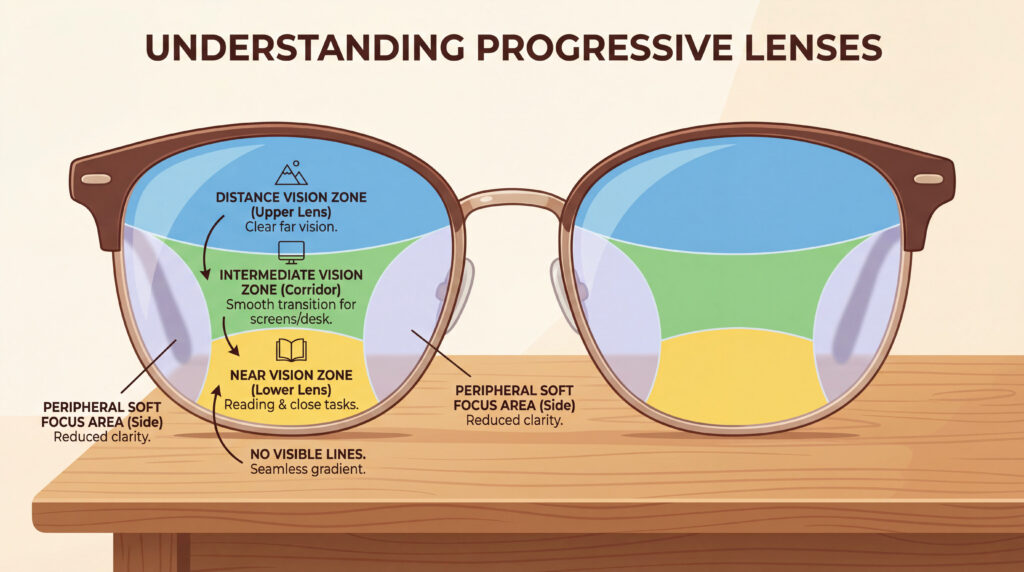
One of the first adjustments you’ll need to make when wearing progressive lenses is to learn how to move your eyes vertically. Unlike single vision lenses, progressive lenses have multiple zones, each designed for different viewing distances:
- Distance Vision: The wide area at the top of the lens is primarily for viewing objects at a distance.
- Intermediate Vision: The central portion helps with tasks like computer work.
- Near Vision: The lower section of the lens is optimized for reading and other close-up activities.
- Peripheral Vision: The sides of the lenses assist with your peripheral view.
To find the clearest vision, keep your head steady and focus on moving your eyes up and down through these various zones. This technique will help you adapt to the different areas of the lens and improve your visual comfort.
Tip #2: Use Your Head to Adjust Side-to-Side
Another crucial adjustment involves how you look side-to-side. Instead of merely turning your eyes, you’ll need to move your head and point your nose in the direction you want to see. This head movement is essential for utilizing the full range of your progressive lenses.
To practice this technique, you can follow these steps:
- Extend your fingers out to each side at eye level.
- Keep your head still and focus on one finger, then smoothly turn your head to focus on the other finger.
- Repeat this exercise several times to build muscle memory.
By incorporating head movements with your eye movements, you will enhance your ability to see clearly at different angles, ultimately improving your overall experience with progressive lenses.
Tip #3: Be Patient – Adjusting Takes Time
One of the most important things to remember when transitioning to progressive lenses is that patience is key. It can take anywhere from 2 to 3 weeks for your eyes and brain to fully adjust to the new prescription and lens design. Here’s what to expect during this adjustment period:
- Many users notice improvement within the first few days to a week.
- Some individuals may require more time, especially if they have previously worn a different style of glasses.
- Even if you’ve worn progressive lenses before, a new prescription can feel different.
During this adjustment phase, it’s advisable to wear your new no-line progressives as much as possible. If you continue to experience discomfort or vision issues after a week, do not hesitate to consult your eye care professional. They can provide further guidance and make any necessary adjustments to your prescription.
Adjusting to Progressive No-Line Lenses is Worth the Effort
While the transition to progressive lenses can be daunting, the benefits far outweigh the initial discomfort. Here are some compelling reasons why it’s worth the effort:
- Clearer Vision: Progressive lenses provide a smoother transition between different vision zones, offering clearer vision than traditional bifocals or reading glasses.
- Enhanced Comfort: With the ability to see at multiple distances without switching glasses, you’ll experience less eye strain and enjoy visual tasks more comfortably.
- Avoiding “Cheaters”: Unlike store-bought reading glasses, progressive lenses are tailored to your specific prescription, ensuring optimal visual performance.
Many individuals find that, with time and practice, wearing progressive lenses becomes second nature. The initial adjustments will lead to a more comfortable and convenient visual experience, allowing you to engage more fully in your daily activities.
Conclusion
Wearing progressive lenses comes with a learning curve, but by following these tips, you can ease into the experience and take full advantage of the lenses’ benefits. Remember to move your eyes up and down to find the best focus, use head movements for side-to-side viewing, and be patient as your vision adjusts. With time, you will likely find that progressive lenses enhance your quality of life by providing clearer, more comfortable vision. Embrace the transition—your eyes will thank you!