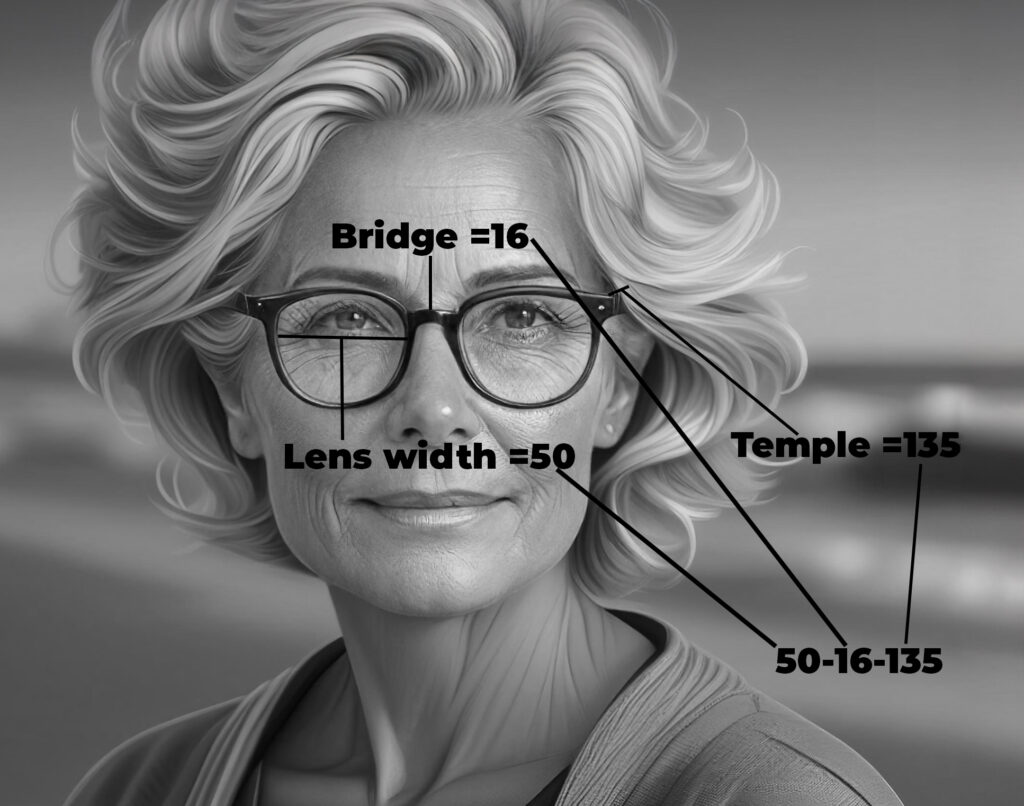
1. Understanding Frame Measurements
- Lens Width: The horizontal diameter of one lens.
- Bridge Width: The distance between the two lenses.
- Temple Length: The length of the arm piece from the frame to the ear.
2. Measure Your Current Eyeglasses
- Lens Width: This is the horizontal width of each lens at its widest point. To measure it, place your ruler or measuring tape at the outer edge of one lens and extend it horizontally to the opposite edge. This measurement is crucial as it determines how well the lenses cover your eyes and provide a comfortable field of vision.
- Bridge Width: This measurement refers to the distance between the two lenses at the bridge of your nose. To measure the bridge width, locate the innermost points of each lens where they connect to the nose bridge. Measure the distance between these points. The bridge width is essential for ensuring that your glasses fit comfortably on your nose without slipping or pinching.
- Temple Length: The temple length is the length of the arm of your glasses, from the hinge (where the arm connects to the frame) to the end tip that rests behind your ear. To measure it, use your ruler or tape measure to follow the curve of the arm from the hinge all the way to the end. Accurate temple length measurement is important for the overall comfort and stability of your glasses.
3. Determine Your Face Size
- Small Face Size: If your current glasses have a lens width below 48 mm, you likely have a small face size. Glasses in this range are designed to fit narrower faces, ensuring the frames don’t overwhelm your facial features. They provide a snug fit that is both comfortable and stylish for those with smaller facial dimensions.
- Medium Face Size: For those whose glasses have a lens width ranging from 48 mm to 53 mm, a medium face size is most likely. This size range is the most common and offers a balanced fit that is neither too tight nor too loose. Glasses within this range should sit comfortably on your face, providing an ideal blend of function and fashion.
- Large Face Size: If the lens width of your glasses is above 53 mm, you probably have a large face size. Larger frames are designed to provide ample coverage and a comfortable fit for broader faces. They ensure that the glasses sit well on your face without feeling restrictive, offering both aesthetic appeal and practical comfort.
4. Face Shape Guide
- Round Faces: If you have a round face, characterized by full cheeks and a softer chin, larger, rectangular frames can provide a striking contrast. These frames add definition and structure, making your face appear longer and more angular. Look for frames that are wider than they are tall to create a balanced look.
- Square Faces: Square faces typically feature a strong jawline, broad forehead, and wide cheekbones. To soften these angles, rounder, smaller frames are ideal. Oval or round frames can balance the sharpness of your features, adding a touch of softness and harmony to your overall look.
- Oval Faces: Oval faces are well-balanced with slightly wider cheekbones and a gently curved jawline. Most frame sizes work well with this versatile face shape. However, it’s important to ensure the frames are not too wide or too narrow. Aim for frames that maintain the natural balance of your face and complement your proportions.
- Heart-Shaped Faces: Heart-shaped faces are wider at the forehead and narrower at the chin. To balance these proportions, consider frames that are wider at the bottom. Frames with a broader lower half can offset the width of your forehead and create a more harmonious appearance. Light-colored or rimless frames can also soften the overall look.
