
I get asked this nearly every day, usually by someone standing at the mirror with a pair in each hand. Most of them expect me to name a winner. I don’t, because the right answer changes from one face to the next, and the reasons are simple once you know them.
My name is Miriam, and I’m one of the opticians at our shop in Dallas, Georgia. This is how I think it through with people at the frame wall.
What “plastic” means at an optical shop
Almost every good plastic frame is made of acetate. It starts out as cotton and wood pulp, gets pressed into thick sheets, and the frames are cut from those sheets and polished. That’s how acetate carries those deep tortoise patterns and layered colors: the color goes all the way through the material instead of sitting on top as paint.
There’s also a lighter, bendier plastic (you’ll hear names like TR90) that shows up in a lot of kids’ frames and sport styles. You can twist it in ways that would make me wince with anything else.
What “metal” means
Metal frames run from inexpensive alloys up to stainless steel and titanium. Titanium is the one I point people toward when weight matters. A titanium frame sits so lightly that most people forget they have it on by lunch.
Metal frames are usually thinner around the lens, so they look quieter on the face. Acetate makes more of a statement. Neither is better. It comes down to whether you want your glasses noticed.
How they sit on your nose
This is the difference nobody thinks about until they’ve worn the wrong one for a week.
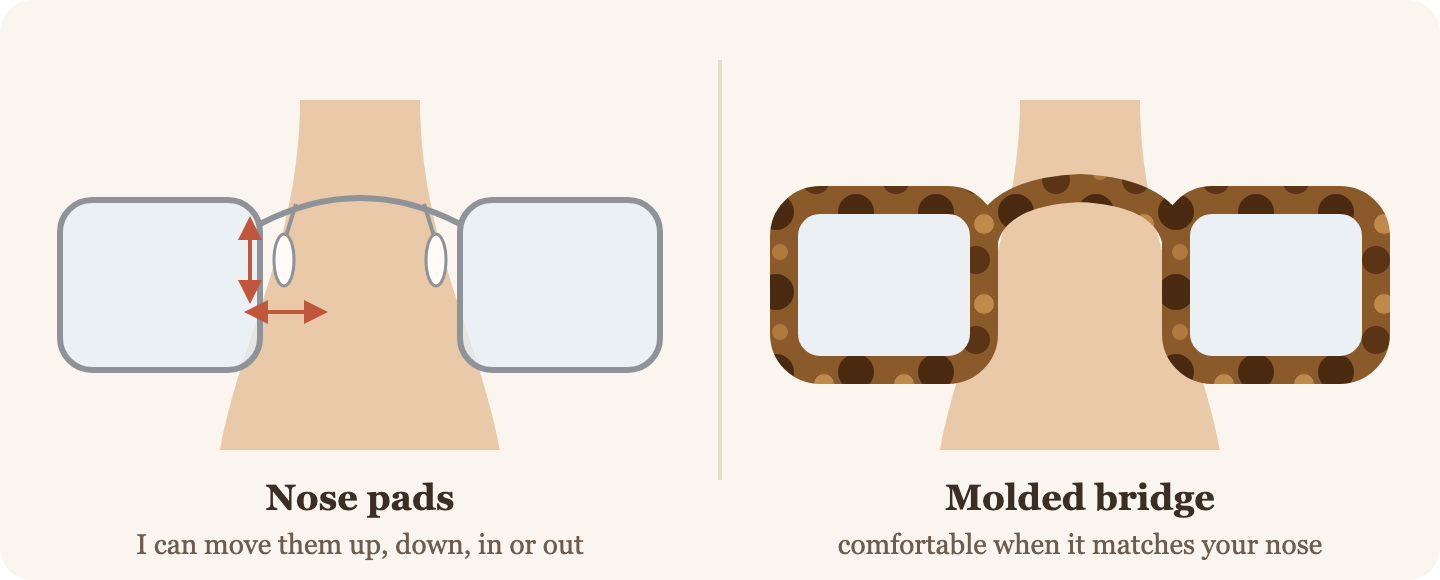
Most metal frames rest on two small nose pads, and I can bend those pads until the frame sits right where your eyes need it. If you have a low or narrow bridge, the kind where glasses slide down or the bottom edge lands on your cheeks when you smile, adjustable pads are often the fix.
Most acetate frames have the bridge molded right into the front. When that shape matches your nose, it’s wonderfully comfortable and spreads the weight out. When it doesn’t, there’s only so much I can do. So when you try on an acetate pair, smile big and look down at your phone, and see if it stays put.
Your prescription gets a vote
With a stronger prescription, especially for nearsightedness, your lenses get thicker toward the edges. A chunky acetate rim hides most of that edge. A thin metal rim puts it on display.
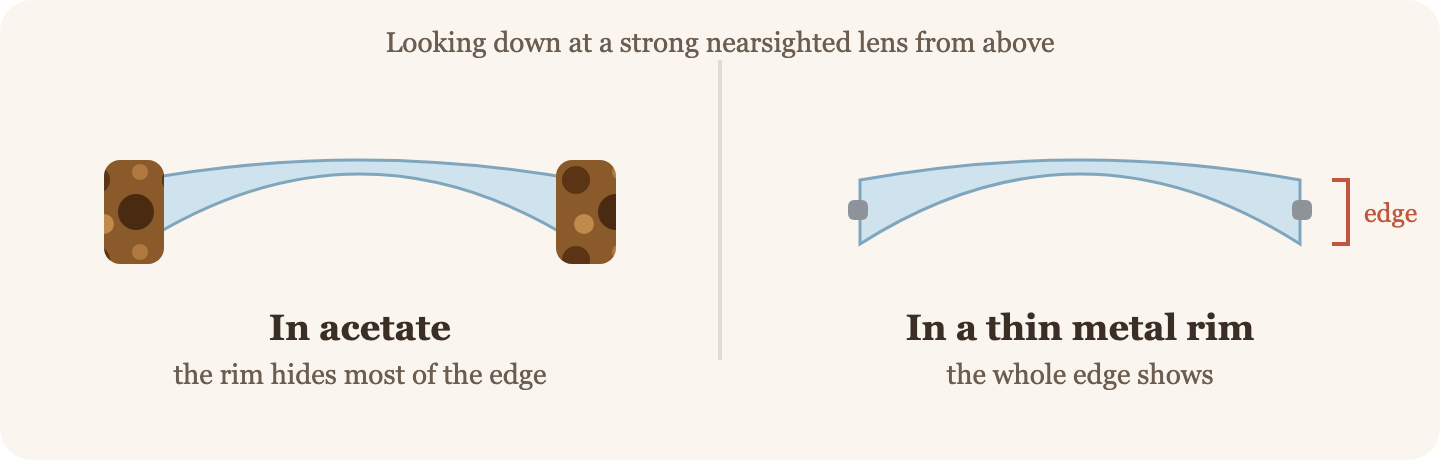
Thinner high-index lenses help, and so does choosing a smaller frame. But if you’ve ever looked at your glasses from the side and seen a thick ring of lens, a sturdy acetate frame will make you happier. With a very light prescription it hardly matters, and you can choose on looks alone.
Skin, sweat and allergies
Some people react to nickel, which turns up in cheaper metal alloys. If earrings have ever made your ears itch, tell me, and we’ll stick to titanium, stainless steel or acetate. Sweat can also wear the finish off inexpensive metal over time, which matters here in Georgia from about May to October.
Acetate rarely causes that kind of reaction. After a few years of skin oils it can look a little dull, and a polish usually brings it back.
When glasses have a hard life
If your glasses tend to end up in a back pocket or under the person sitting on the couch, that changes my advice.
A bent metal frame can usually be bent back. Acetate holds its shape well, but pushed too far it can crack at the hinge or the bridge. Flexible plastics like TR90 forgive almost anything, which is why I reach for them with kids.
I adjust acetate by warming it until it softens, then shaping it to your face. Metal I adjust cold, with pliers. Either way, bring them back whenever they feel off and I’ll fix the fit.
So which one should you pick?
If you want something light and barely there, or your glasses never seem to stay up on your nose, start with metal. Titanium if the budget allows.
If you have a strong prescription or you love color and bold shapes, start with acetate.
And if you can’t decide, try on one of each in the same shape. People surprise themselves. I’ve watched plenty of “I only wear metal” customers walk out in tortoise acetate, grinning at their reflection in the car window.
We have more than a thousand frames on the wall in Dallas, plastic and metal, and you’re welcome to try on as many as you like. Bring the glasses you wear now so I can see what’s been working and what hasn’t. You can book an eye exam or just stop by. I’ll be here.
About the Author

Miriam is a Licensed Optician with more than 30 years of experience helping customers with their vision.